
Using the Cloud for ITAR Data: What the Law Says
Yes, storing ITAR data in the cloud is possible, but only if very specific conditions are met. According to 22 CFR 120.54, certain activities involving encrypted ITAR-regulated technical data are not considered exports, reexports, or retransfers if they align with strict criteria. This clarification allows U.S. defense contractors, aerospace firms, and tech companies to use cloud storage solutions, but only those that are ITAR-compliant.
While cloud technology enables flexibility and scalability, mishandling this sensitive data in this environment can lead to serious violations. That is why it is critical to understand the exceptions and ensure your cloud infrastructure is fully aligned with ITAR requirements.
Encryption Requirements for Storing ITAR Data
To legally store ITAR technical data in the cloud under the encryption exception, your organization must meet the following criteria:
- The ITAR technical data must be unclassified
- End-to-end encryption must be applied at all times
- Cryptographic modules must be FIPS 140-2 or FIPS 140-3 validated
- ITAR data must not be stored in or transmitted to countries listed in 22 CFR 126.1
- Encryption keys must remain under exclusive control of U.S. persons and not be accessible to foreign parties
Failing to meet even one of these conditions could legally qualify the activity as an export, placing your business at risk for civil penalties, criminal charges, or debarment.
Why ITAR Data Requires Specialized Cloud Solutions
ITAR data includes technical documents, source code, blueprints, specifications, and other sensitive material related to U.S. defense articles. Unlike general business data, ITAR-regulated content is subject to tight access, transfer, and storage restrictions. Standard cloud storage solutions often fall short of these requirements.
To safely store CUI, organizations must implement systems that enforce role-based access, maintain audit trails, and use encryption protocols that comply with both ITAR and NIST standards.
How RegDOX Helps You Stay Compliant
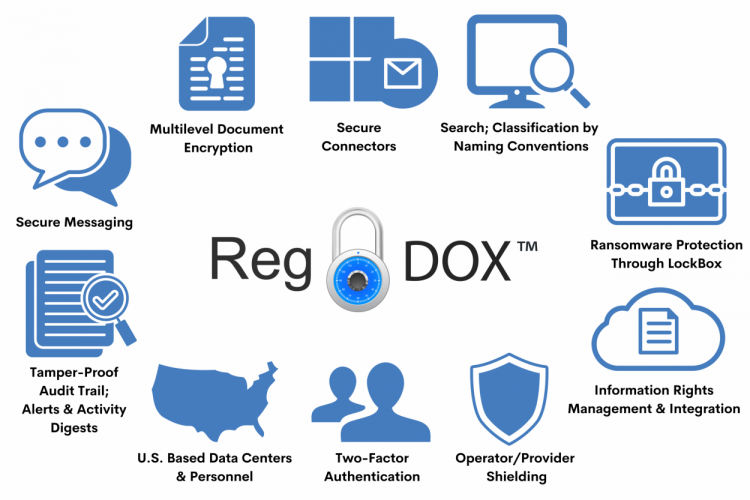
RegDOX Solutions offers cloud platforms specifically designed for managing CUI securely and in full compliance with export control laws. These features help meet DDTC expectations while reducing legal and operational risk:
- FIPS 140-2 validated encryption for protecting sensitive ITAR technical data
- U.S.-only data hosting and access controls
- In-cloud document editing without exposing files to download risks
- Immutable audit logs for traceability and regulatory transparency
Choosing a secure, ITAR-compliant solution like RegDOX ensures your technical data is protected and fully auditable while keeping workflows efficient.
Conclusion: Store Smart and Stay Compliant
Cloud storage is no longer off-limits for ITAR data, but it must be managed under strict legal and technical safeguards. Organizations that take a proactive, policy-driven approach can maintain security, meet regulatory obligations, and benefit from modern collaboration tools.
In our next post, we will explore how RegDOX supports every stage of ITAR compliance, including data encryption, audit readiness, and role-based access control.
About RegDOX
At RegDOX Solutions Inc., we help defense contractors and high-security organizations simplify compliance with ITAR, EAR, DFARS, and CMMC requirements. Our secure, cloud-based platforms combine end-to-end encryption, access controls, and audit-ready documentation to keep your data—and your contracts—safe.
Need help navigating evolving cybersecurity regulations?
Request a Compliance Demo
Or contact us directly at info@regdox.com
See the enclave in action.
The Compliant Computing Enclave keeps CUI inside one boundary, with your endpoints out of scope and the evidence trail already built.
Talk to an Expert →